كيف يعمل الذكاء الاصطناعي في Medera؟
يتجاوز الذكاء الاصطناعي في الرعاية الصحية مفهوم الأتمتة أو تحويل المحادثات إلى نصوص. فالقيمة الأعمق تبدأ عندما يستطيع النظام فهم السياق السريري، وتنظيم البيانات المتفرقة، وربط الأحداث عبر الزمن، وتحويل الكم الكبير من المعلومات إلى معرفة قابلة للمراجعة والاستفادة.
من هذا المنطلق، تُبنى Medera كـ طبقة ذكاء سريري تعمل بين البيانات والممارس الصحي؛ تستوعب التفاعل السريري، وتربطه بتاريخ الحالة وبياناتها، وتنظم المعرفة المتولدة منه، ثم تقدمها بصورة تساعد الطبيب على تكوين رؤية أكثر شمولاً مع بقاء القرار السريري النهائي تحت مسؤوليته المهنية.

الذكاء الاصطناعي ورؤية السعودية 2030
يتقاطع توجه Medera مع التحول الذي تشهده منظومة الصحة في المملكة ضمن رؤية السعودية 2030 وبرنامج تحول القطاع الصحي، حيث أصبحت الصحة الرقمية والبيانات والتقنيات الحديثة من الممكنات المهمة لتحسين الوصول إلى الرعاية ورفع جودتها وكفاءتها وتعزيز تكاملها واستمراريتها.
ولا يقتصر هذا التحول على رقمنة الإجراءات، بل يمتد إلى بناء منظومة صحية أكثر ترابطاً تستطيع الاستفادة من البيانات والذكاء الاصطناعي وأدوات التحليل ودعم القرار لتحسين تجربة الرعاية الصحية.
وهنا يتقاطع دور Medera مع هذا التوجه من خلال التركيز على ربط السياق والبيانات والمعرفة السريرية وليس مجرد إضافة نظام رقمي آخر إلى بيئة العمل.
من التفاعل السريري إلى المعرفة
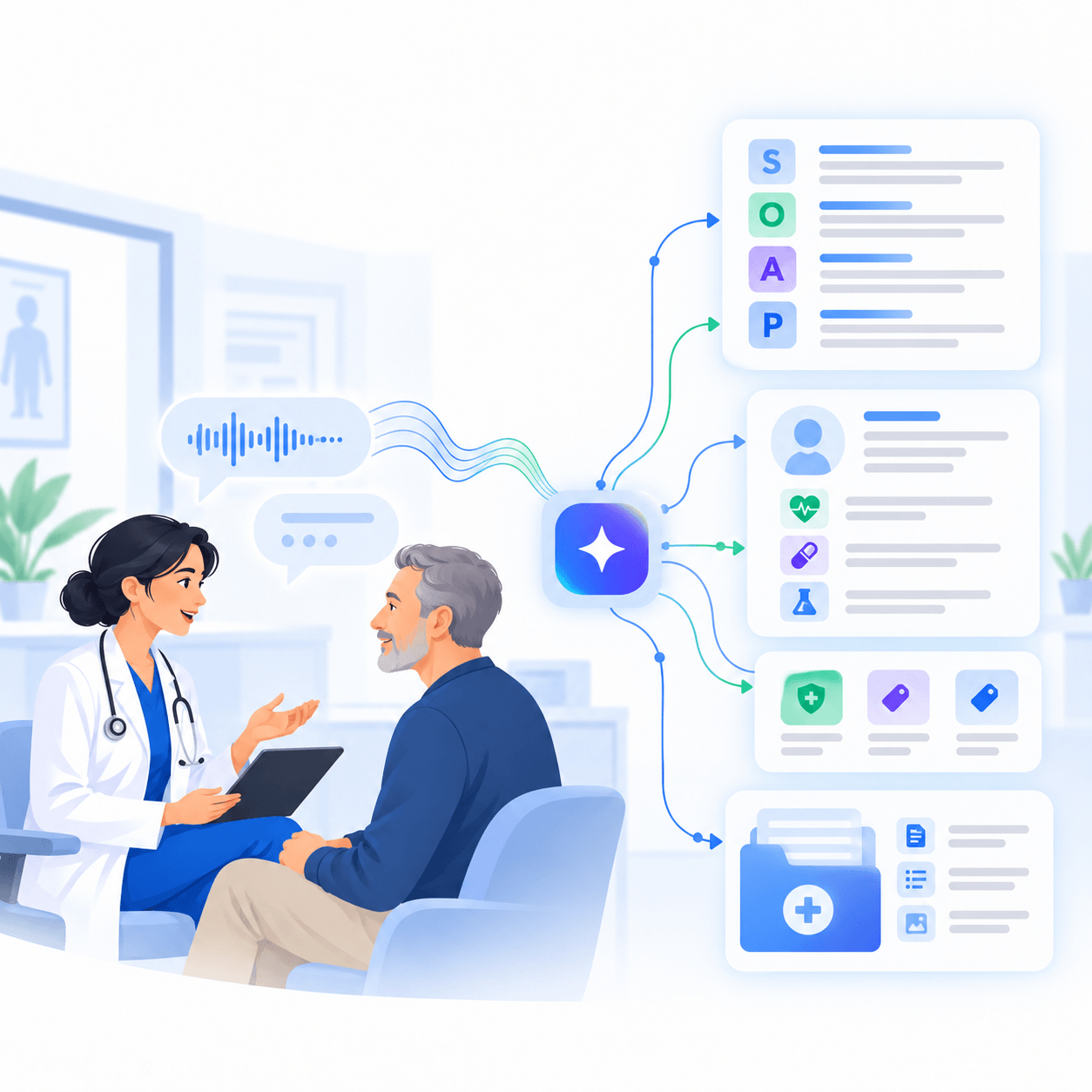
تبدأ دورة الذكاء في Medera من التفاعل السريري وما يرتبط به من بيانات. فقد يحتوي لقاء واحد على أعراض وتغيرات زمنية وأدوية ونتائج وملاحظات وتاريخ سابق واستجابة لعلاج أو تدخل معين.
تعمل طبقة الذكاء السريري على تنظيم هذه العناصر وفهم العلاقات بينها وربطها بالمعلومات السابقة، بحيث لا تبقى البيانات أحداثاً منفصلة، وإنما تتحول تدريجياً إلى معرفة سريرية متجددة.
وزارة الصحة والتحول إلى منظومة صحية رقمية مترابطة
تدعم وزارة الصحة السعودية التحول الرقمي والابتكار واستخدام البيانات والذكاء الاصطناعي في تطوير الرعاية الصحية، ضمن توجهات برنامج تحول القطاع الصحي ومبادرات الصحة الرقمية.
ويتقاطع هذا الاتجاه مع Medera في تنظيم المعلومات السريرية، وربط المعرفة عبر رحلة المريض، والاستعداد للتكامل مع الأنظمة الصحية، وتحويل البيانات إلى سياق يمكن الاستفادة منه بصورة أكثر فاعلية داخل بيئة الرعاية.
صندوق الاستثمارات العامة وهيوماين: بناء قدرات الذكاء الاصطناعي الوطنية
يمثل صندوق الاستثمارات العامة أحد المحركات الرئيسية للاستثمار في القطاعات المستقبلية داخل المملكة، ومن أبرز خطواته في مجال الذكاء الاصطناعي إطلاق شركة هيوماين (HUMAIN) لبناء قدرات متكاملة عبر سلسلة الذكاء الاصطناعي تشمل مراكز البيانات والبنية السحابية والنماذج المتقدمة والتطبيقات.
وتمثل هذه البيئة الوطنية المتنامية أساساً مهماً لتطوير تطبيقات سعودية متخصصة قادرة على الاستفادة من البنية الحوسبية والنماذج المتقدمة وتحويلها إلى حلول قطاعية أكثر عمقاً.
وفي هذا المشهد، تتموضع Medera على مستوى التطبيق السريري المتخصص؛ أي تحويل قدرات الذكاء الاصطناعي إلى تجربة مرتبطة فعلياً بالسياق الصحي والممارسة اليومية ورحلة المريض.
سدايا: البيانات والذكاء الاصطناعي كأساس للتحول
تمثل الهيئة السعودية للبيانات والذكاء الاصطناعي «سدايا» أحد المحاور الوطنية الرئيسية لتطوير البيانات والذكاء الاصطناعي في المملكة، بما يشمل بناء القدرات والتقنيات والأطر المرتبطة باستخدام البيانات والذكاء الاصطناعي.
كما تمتد تطبيقات الذكاء الاصطناعي الوطنية إلى القطاع الصحي، وهو ما يعزز أهمية وجود بيانات منظمة وسياق قابل للمعالجة وحوكمة واضحة واستخدام مسؤول للتقنيات الذكية.
وهذا يتقاطع مباشرة مع فلسفة Medera: لا يمكن بناء ذكاء سريري فعال دون بيانات منظمة ومترابطة يمكن فهمها وتحويلها إلى معرفة قابلة للاستخدام.
من البيانات إلى سياق سريري مترابط
قد تحتوي المنشأة الصحية على آلاف الملاحظات والنتائج والزيارات والتفاعلات، لكن وجود هذه البيانات في أنظمة مختلفة لا يعني بالضرورة وجود معرفة مترابطة.
تعمل Medera على ربط المعلومات حول المريض بحيث تصبح الزيارة الحالية امتداداً لما سبقها، ويمكن قراءة النتائج الجديدة في ضوء التاريخ والملاحظات والبيانات السابقة.
فهم التفاعل السريري
لا تتعامل Medera مع التفاعل السريري على أنه مجموعة كلمات فقط، بل كمصدر لمعلومات لها علاقات ومعانٍ وسياق. فقد يتضمن التفاعل أعراضاً ومدة زمنية وتغيرات في الحالة واستجابة لعلاج ونتائج سابقة وملاحظات مرتبطة بتاريخ المريض.
تقوم طبقة الذكاء السريري بتنظيم هذه العناصر وربطها بما هو معروف مسبقاً، بما يساعد على بناء صورة أكثر اكتمالاً عن الحالة.
تنظيم المعرفة السريرية
بعد فهم السياق، تأتي مرحلة تنظيم المعلومات. فالبيانات غير المنظمة قد تكون صعبة المراجعة حتى لو كانت غنية بالتفاصيل.
تعمل Medera على تحويل المعلومات المتولدة من التفاعل والسجل إلى عناصر مترابطة يمكن مراجعتها، مع إبقاء العلاقة بين الحدث الحالي والتاريخ السريري السابق واضحة قدر الإمكان.
ربط المعرفة عبر الزمن
الحالة الصحية لا تبدأ من الزيارة الحالية ولا تنتهي عندها. لذلك يمثل الزمن عنصراً أساسياً في الذكاء السريري.
تسعى Medera إلى ربط الزيارات والنتائج والأدوية والملاحظات والتغيرات السابقة ضمن سياق زمني مستمر، بحيث يستطيع الممارس الصحي مراجعة ما تغير وما استمر وكيف تطورت الحالة مع مرور الوقت.
المجلس الصحي السعودي والبنية الوطنية للمعلومات الصحية
تتطور المملكة في مجال ربط المعلومات الصحية ورفع النضج الرقمي للمنشآت، من خلال منظومة تشمل المجلس الصحي السعودي والجهات الوطنية المعنية بالمعلومات الصحية وتبادل البيانات والملفات الصحية الرقمية.
بالنسبة إلى Medera، تعد هذه البيئة مهمة لأن نجاح الذكاء السريري لا يعتمد على قوة نموذج الذكاء الاصطناعي وحده، بل على جودة البيانات، وقابلية التكامل، والصلاحيات، والحوكمة، وقدرة الأنظمة المختلفة على العمل ضمن بيئة صحية مترابطة.
الهيئة السعودية للتخصصات الصحية: الممارس في قلب التحول
تلعب الهيئة السعودية للتخصصات الصحية دوراً محورياً في تنظيم وتطوير الممارسين الصحيين والتعليم والتدريب والتطوير المهني في المملكة.
ومع توسع استخدام الذكاء الاصطناعي في الرعاية الصحية، تصبح قدرة الطبيب والممارس على فهم هذه الأدوات ومراجعة مخرجاتها واستخدامها بطريقة مسؤولة جزءاً مهماً من مستقبل الممارسة الصحية.
وهذه نقطة تقاطع جوهرية مع Medera؛ فالمنصة لا تقوم على فكرة استبدال الطبيب، بل على زيادة قدرته على التعامل مع المعرفة السريرية مع إبقاء التفسير والمراجعة والقرار النهائي للممارس المؤهل.

الجامعات والكليات الطبية السعودية: البحث والتعليم والتطبيق السريري
تمثل الجامعات والكليات الطبية والصحية السعودية ضلعاً رئيسياً في مستقبل الذكاء الاصطناعي الصحي، فهي تجمع بين التعليم الطبي والبحث العلمي والممارسة السريرية والتقنيات الجديدة.
ويظهر هذا الاتجاه في مؤسسات مثل كلية الطب بجامعة الملك سعود التي أنشأت معملاً للذكاء الاصطناعي يركز على دمج التقنية في التعليم الطبي والبحث الصحي والممارسة السريرية، وتطوير أدوات مرتبطة بالتشخيص والطب الدقيق ودعم اتخاذ القرار.
وتمثل الجامعات والكليات الصحية بالنسبة إلى Medera بيئة مهمة للبحث، ودراسة الاستخدامات السريرية، وتطوير النماذج، والتحقق العلمي، وفهم تأثير الذكاء الاصطناعي على الممارسة الصحية والتعليم الطبي.
كيف يعمل محرك الذكاء في Medera؟
يمكن تبسيط دورة العمل في ست طبقات مترابطة:
- استيعاب السياق: استقبال المعلومات والتفاعلات والبيانات المرتبطة بالحالة.
- الفهم السريري: التعرف على العناصر المهمة والعلاقات والمعاني الموجودة داخل السياق.
- تنظيم المعرفة: تحويل البيانات غير المنظمة إلى عناصر سريرية مترابطة وقابلة للمراجعة.
- الربط الزمني: ربط المعلومات الجديدة بتاريخ المريض والزيارات والنتائج السابقة.
- التحليل والإبراز: تحديد المعلومات والتغيرات والعلاقات التي قد تستحق انتباه المستخدم.
- المؤازرة: تقديم السياق والمعرفة بصورة تساعد الطبيب على المراجعة والتقييم واتخاذ القرار.
الطبيب في مركز القرار
لا يهدف الذكاء الاصطناعي في Medera إلى اتخاذ القرار الطبي بصورة مستقلة، وإنما إلى تقليل تشتت المعلومات وتنظيم المعرفة وإبراز العناصر المرتبطة بالسياق الحالي.
يبقى الممارس الصحي مسؤولاً عن مراجعة المعلومات وتفسيرها وربطها بالحالة واتخاذ القرار السريري النهائي.
من الذكاء الاصطناعي العام إلى الذكاء السريري المتخصص
لا تكمن القيمة في امتلاك نموذج ذكاء اصطناعي فقط. فالقطاع الصحي يحتاج إلى طبقات إضافية من السياق والمعرفة السريرية والحوكمة والصلاحيات والتكامل والمراجعة البشرية.
لذلك تسعى Medera إلى العمل في المساحة الواقعة بين تقنيات الذكاء الاصطناعي العامة والممارسة الصحية الفعلية، وتحويل الإمكانات التقنية إلى ذكاء سريري يمكن توظيفه داخل رحلة الرعاية.
Medera: طبقة ذكاء سريري داخل منظومة صحية متطورة
يتشكل مستقبل الذكاء الاصطناعي الصحي في المملكة من منظومة واسعة تضم وزارة الصحة، والمجلس الصحي السعودي، وسدايا، والهيئة السعودية للتخصصات الصحية، وصندوق الاستثمارات العامة وهيوماين، والجامعات والكليات الطبية، والمنشآت الصحية، والشركات التقنية والابتكارية.
تتجه Medera إلى بناء دورها داخل هذا المشهد كطبقة ذكاء سريري تربط البيانات بالسياق، والسياق بالمعرفة، والمعرفة بالممارس الصحي.
بيانات ← سياق ← معرفة ← تحليل ← رؤية سريرية ← مؤازرة الممارس ← رعاية أكثر اتصالاً
How Artificial Intelligence Works in Medera
Artificial intelligence in healthcare goes far beyond automation or converting conversations into text. Its deeper value emerges when technology can understand clinical context, organize fragmented information, connect events over time, and transform large volumes of data into knowledge that healthcare professionals can review and use.
Medera is therefore being developed as a clinical intelligence layer between healthcare data and the healthcare professional. It processes clinical interactions, connects them with patient history and relevant data, organizes evolving knowledge, and presents it in a form that can support a more comprehensive clinical view while leaving final clinical judgment with the qualified professional.
Artificial Intelligence and Saudi Vision 2030
The direction of Medera intersects with the transformation of Saudi Arabia's healthcare ecosystem under Saudi Vision 2030 and the Health Sector Transformation Program, where digital health, data, and emerging technologies are important enablers of accessibility, quality, efficiency, integration, and continuity of care.
This transformation goes beyond digitizing processes. It includes building a more connected health ecosystem capable of using data, artificial intelligence, analytics, and decision-support technologies to improve healthcare delivery.
Medera aligns with this direction by focusing on connecting clinical context, data, and knowledge rather than simply adding another isolated digital application.
From Clinical Interaction to Knowledge
The intelligence cycle within Medera begins with the clinical interaction and the information surrounding it. A single encounter may contain symptoms, timelines, medications, results, observations, previous history, and responses to earlier interventions.
The clinical intelligence layer organizes these elements, identifies relationships between them, and connects them with existing information so that individual data points gradually become evolving clinical knowledge.
Saudi Ministry of Health and the Connected Digital Health Ecosystem
The Saudi Ministry of Health continues to support digital transformation, innovation, data, and artificial intelligence as part of the evolving healthcare ecosystem and the objectives of the Health Sector Transformation Program.
This direction intersects with Medera through its focus on structured clinical information, continuity across the patient journey, interoperability readiness, and transforming healthcare data into context that can be more effectively used within care environments.
PIF and HUMAIN: Building National AI Capabilities
The Public Investment Fund (PIF) is a major investor in future-oriented sectors in Saudi Arabia. One of its major AI initiatives is HUMAIN, established to develop capabilities across the AI value chain, including data centers, cloud infrastructure, advanced models, and applications.
This growing national environment provides an important foundation for specialized Saudi AI applications capable of translating advanced computing and model capabilities into deeper sector-specific solutions.
Within this landscape, Medera is positioned at the specialized clinical application layer: translating AI capabilities into workflows and intelligence connected to healthcare delivery, clinical context, and the patient journey.
SDAIA: Data and AI as Foundations for Transformation
The Saudi Data & AI Authority (SDAIA) is a central national institution in Saudi Arabia's data and artificial intelligence ecosystem, supporting the development of national capabilities, technologies, and frameworks related to data and AI.
National AI activity also extends into healthcare, reinforcing the importance of structured data, processable context, governance, and responsible use of intelligent technologies.
This directly intersects with the philosophy of Medera: meaningful clinical intelligence requires structured and connected data that can be understood and transformed into usable knowledge.
From Healthcare Data to Connected Clinical Context
A healthcare organization may contain thousands of observations, results, encounters, and interactions, yet having this information across multiple systems does not automatically create connected knowledge.
Medera is designed to connect information around the patient so that the current encounter becomes an extension of what came before and new results can be understood in relation to previous history, observations, and data.
Understanding Clinical Interactions
Medera does not approach the clinical interaction as a collection of words alone. It is treated as a source of information containing relationships, meaning, and context.
A conversation may include symptoms, timelines, changes in condition, treatment response, previous results, and observations linked to the patient's history. The clinical intelligence layer organizes these elements and connects them with what is already known about the patient.
Organizing Clinical Knowledge
After context is understood, information must be organized. Unstructured information may be difficult to review even when it contains valuable detail.
Medera is designed to transform information generated through clinical interactions and records into connected, reviewable knowledge while preserving relationships between the current event and previous clinical history.
Connecting Knowledge Over Time
A patient's condition does not begin with the current encounter and does not end when it is completed. Time is therefore a fundamental dimension of clinical intelligence.
Medera aims to connect visits, results, medications, observations, and previous changes within a continuous longitudinal context, helping healthcare professionals understand what changed, what remained consistent, and how the patient's condition developed over time.
Saudi Health Council and the National Health Information Environment
Saudi Arabia continues to advance health information connectivity and the digital maturity of healthcare organizations through an ecosystem involving the Saudi Health Council and national health information initiatives.
For Medera, this environment is important because successful clinical intelligence depends not only on the AI model itself but also on data quality, interoperability, permissions, governance, and the ability of healthcare systems to function within a connected digital environment.
Saudi Commission for Health Specialties: Keeping the Practitioner at the Center
The Saudi Commission for Health Specialties (SCFHS) plays a central role in healthcare professional regulation, education, training, and professional development in Saudi Arabia.
As artificial intelligence becomes more integrated into healthcare, professionals increasingly need to understand these technologies, review their outputs, and use them responsibly within professional practice.
This is a fundamental point of alignment with Medera: the platform is not designed to replace the physician. It is designed to augment the professional's ability to work with clinical knowledge while keeping interpretation, review, and final decision-making with qualified practitioners.
Saudi Universities and Medical Colleges: Research, Education, and Clinical Application
Saudi universities, medical colleges, and health sciences institutions are an important part of the future healthcare AI ecosystem because they connect medical education, scientific research, clinical practice, and emerging technologies.
This direction is visible at institutions such as the College of Medicine at King Saud University, which has established an Artificial Intelligence Lab focused on integrating AI into medical education, healthcare research, and clinical practice, including diagnostics, precision medicine, and decision support.
For Medera, universities and health colleges represent an important environment for research, clinical-use studies, model development, scientific validation, and understanding how AI affects healthcare practice and medical education.
How Does the Medera AI Engine Work?
The process can be understood as six connected layers:
- Context Acquisition: Receiving information, interactions, and data relevant to the patient's condition.
- Clinical Understanding: Identifying clinically relevant elements, relationships, and meaning within the context.
- Knowledge Organization: Transforming unstructured information into connected and reviewable clinical knowledge.
- Longitudinal Connection: Connecting new information with patient history, previous encounters, and earlier results.
- Analysis and Highlighting: Surfacing changes, relationships, and information that may deserve professional attention.
- Augmentation: Presenting context and knowledge in a form that supports professional review, assessment, and decision-making.
The Physician Remains at the Center of Decision-Making
Artificial intelligence in Medera is not intended to make independent medical decisions. Its role is to reduce information fragmentation, organize clinical knowledge, and surface information relevant to the current context.
Healthcare professionals remain responsible for reviewing information, interpreting it in relation to the patient, and making the final clinical decision.
From General AI to Specialized Clinical Intelligence
Healthcare requires more than access to a powerful AI model. It requires additional layers of clinical context, medical knowledge, governance, permissions, interoperability, and human review.
Medera is therefore designed to operate in the space between general-purpose AI capabilities and real-world healthcare practice, translating technical intelligence into clinical intelligence that can become part of the care journey.
Medera: A Clinical Intelligence Layer Within an Evolving Healthcare Ecosystem
Saudi Arabia's healthcare AI ecosystem brings together the Ministry of Health, Saudi Health Council, SDAIA, Saudi Commission for Health Specialties, PIF and HUMAIN, universities and medical colleges, healthcare providers, and technology and innovation organizations.
Medera is being developed within this landscape as a clinical intelligence layer connecting data to context, context to knowledge, and knowledge to healthcare professionals.
Data → Context → Knowledge → Analysis → Clinical Insight → Practitioner Augmentation → Connected Care
 جاري التحميل ..


